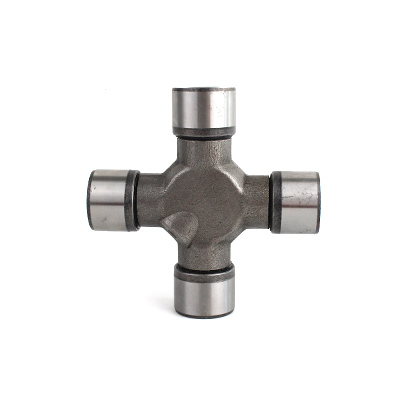


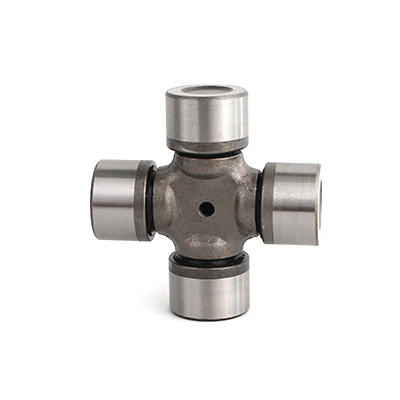
Universal joint cross bearing is a core supporting component of the vehicle transmission system, installed on the four journals of the universal joint cross. Its core function is to cooperate with the universal joint to achieve power transmission at diffe...
Universal joint cross bearing is a core supporting component of the vehicle transmission system, installed on the four journals of the universal joint cross. Its core function is to cooperate with the universal joint to achieve power transmission at different angles, while reducing friction and impact during the transmission process.
Core Structure and Working Principle
Structural Composition: Mainly includes outer ring, needle rollers (or steel balls), cage, and seal cover. Some models are equipped with dust shields, featuring an overall compact design.
Force-Bearing Principle: Through line contact between needle rollers and journals/outer rings (or point contact of steel balls), the rotational power of the universal joint cross is flexibly transmitted, adapting to the angular changes of the transmission shaft during vehicle operation.
Key Features and Advantages
Strong Angular Adaptability: Can operate stably at a large deflection angle (usually ±30°-45°), meeting the power transmission needs during steering and bumpy road conditions.
Excellent Load-Bearing Performance: Adapts to radial and axial loads of the transmission shaft, with wear resistance and impact resistance, capable of withstanding instantaneous heavy loads during vehicle operation.
Good Sealing and Protection: Most are equipped with rubber seal covers, which can prevent dust, water, and oil contamination, extend service life, and adapt to complex working conditions.
Typical Application Scenarios
Automotive Field: Drive shaft universal joints of trucks, buses, off-road vehicles, etc., and drive shafts, steering systems of some passenger cars.
Construction Machinery: Transmission connection parts of excavators, loaders, cranes, etc., adapting to multi-angle power transmission under harsh working conditions.
General Machinery: Agricultural machinery, ship transmission systems, and other equipment that need to change the direction of power transmission.